
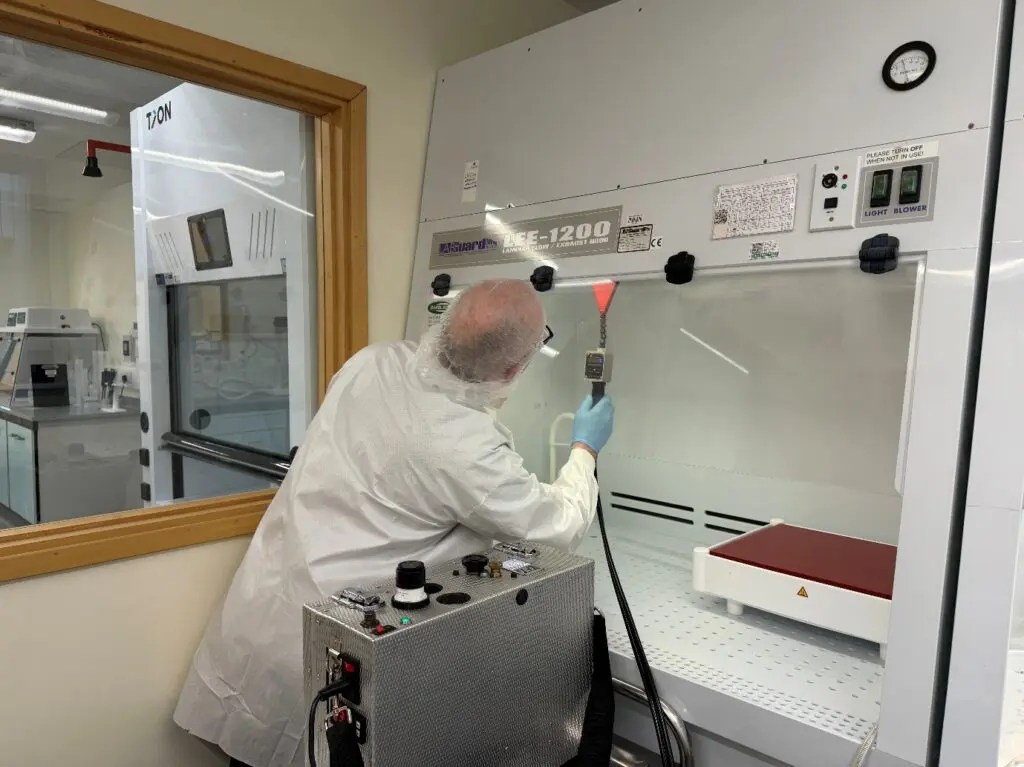
What DOP Testing Is
- A method used to verify that installed HEPA/ULPA filters are functioning correctly and not leaking contaminants back into the environment
- Historically used dioctyl phthalate (DOP) as the aerosol, but modern tests use safer alternatives such as PAO or Shell Ondina oil.
How It Works
- A high‑concentration aerosol is released upstream of the filter.
- A calibrated photometer scans downstream to detect any penetration of particles.
- The process checks the filter media, frame, seals, joints, and housing for leaks
Why It’s Important
- Ensures the integrity of cleanrooms, healthcare environments, LEV systems, spray booths, and other controlled spaces
- Confirms compliance with standards such as BS EN ISO 14644‑3 and BS EN 1822.
- Identifies poorly installed, damaged, or degraded filters before they compromise safety.
When It Should Be Performed
- At installation, after damage, when performance is suspected to be compromised, or at intervals defined by risk assessment (commonly every 6 months in cleanrooms
DOP testing remains a critical validation method for ensuring HEPA/ULPA filtration systems maintain required performance and regulatory compliance.